
Stainless Steel (Inox) – Concept, Composition, Classification & Detailed Applications
Stainless Steel (Inox) – Concept, Classification, Composition, Properties & Applications
Introduce
Stainless steel (stainless steel) is an alloy of iron (Fe) containing at least 10.5% chromium (Cr) and a maximum of 1.2% carbon (C) by mass, along with other elements such as nickel (Ni), manganese (Mn), silicon (Si), molybdenum (Mo) …
Thanks to the natural chromium oxide film on the surface, stainless steel has the ability to resist corrosion – anti-oxidation – good heat resistance – high mechanical strength, widely used in household, industrial, construction, medical.
The most prominent stainless steel is its corrosion resistance, which increases with increasing chromium content. Adding molybdenum increases corrosion resistance in reducing acid and resists pitting attack in chloride solutions. Therefore, there are many types of stainless steel with different chromium and molybdenum contents to suit the environment the alloy must endure. Stainless steel’s resistance to corrosion and staining, low maintenance, and familiar shine make it an ideal material for many applications requiring both the strength of steel and corrosion resistance.
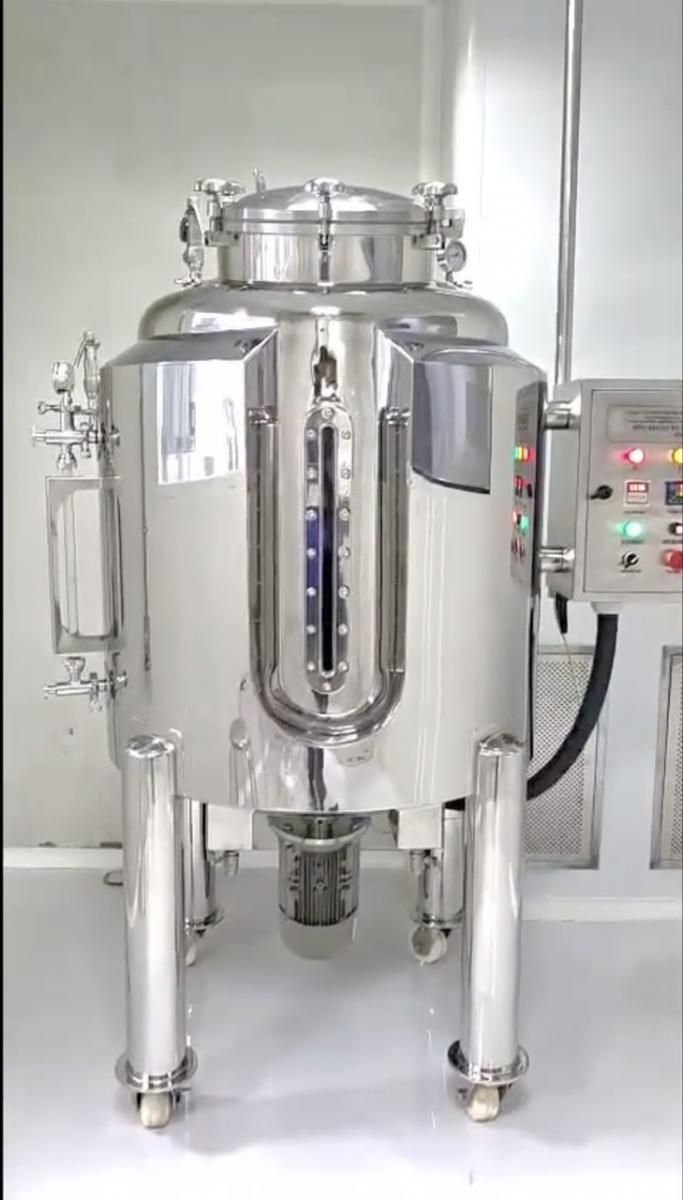
Stainless steel rolled into sheets, plates, bars, wire and tubing is used in: cookware, cutlery, surgical instruments, major appliances; construction materials in large buildings, such as the Chrysler Building; industrial equipment (e.g., in paper mills, chemical plants, water treatment); and chemical and food storage tanks and tankers (e.g., chemical tankers and oil tankers). Stainless steel’s corrosion resistance, ease of cleaning and steam sterilization, and lack of surface coating have also influenced its popularity in commercial kitchens and food processing plants.
Main chemical composition of stainless steel
Iron (Fe): base component.
Chromium (Cr): ≥ 10.5%, creates an anti-corrosion oxide film.
Carbon (C): ≤ 1.2%, increases strength and hardness.
Nickel (Ni): increases rust resistance and ductility.
Molybdenum (Mo): increases resistance to local corrosion (pitting, crevices).
Manganese (Mn), Silicon (Si): improves machinability and mechanical properties.
There are four main types of stainless steel: Austenitic, Ferritic, Austenitic-Ferritic (Duplex) and Martensitic.
1. Austenitic stainless steel
Characteristics:
Non-magnetic, flexible, easy to weld and process.
High corrosion resistance, works well in a wide temperature range.
Typical steel grades: SUS 301, 304, 304L, 316, 316L, 321, 310S… This type contains at least 7% nickel, 16% chromium, carbon (C) 0.08% max.
Applications: making household appliances, tanks, industrial pipes, industrial ships, architectural shells, other construction works…
2. Ferritic stainless steel
Characteristics:
Magnetic, mechanical properties similar to low carbon steel.
Medium corrosion resistance, cheaper than Austenitic.
Typical steel grades: SUS 430, 410, 409… (12–17% Cr).
Application: This type, with 12% Cr, is often used in home appliances, boilers, washing machines, interior decoration…
3. Austenitic – Ferritic (Duplex) stainless steel
Austenitic-Ferritic (Duplex) This is a type of steel with properties “in between” Ferritic and Austenitic, commonly called DUPLEX. In this line, we can mention LDX 2101, SAF 2304, 2205, 253MA. Duplex steel contains much less Ni than Austenitic. DUPLEX has typical characteristics of high strength and flexibility, widely used in the petrochemical industry, paper and pulp production, shipbuilding… In the situation of escalating stainless steel prices due to nickel scarcity, DUPLEX is increasingly being used to replace some steel grades in the Austenitic steel line such as SUS 304, 304L, 316, 316L, 310s…
4. Martensitic stainless steel
Characteristics:
11–13% Cr, high hardness, good strength.
Relatively corrosion resistance.
Applications: knives, blades, turbine blades.

Outstanding properties of stainless steel – Scientific analysis & practical applications
1. Outstanding corrosion and oxidation resistance
Mechanism: Stainless steel contains at least 10.5% Chromium (Cr). When exposed to air, Cr forms an ultra-thin Cr₂O₃ oxide film (~ a few nanometers), adheres tightly to the surface and has the ability to self-heal when scratched.
Effect: This film prevents oxygen, moisture, salt and chemicals from penetrating the steel substrate. If Molybdenum (Mo) is added, the ability to resist local corrosion (pitting, crevices) in chloride environments (seawater, swimming pools, salt industry) increases significantly.
In fact:
Stainless steel 304 works well in humid indoor environments.
Stainless steel 316/316L (with Mo) is stable in seawater, chemical plants.
Duplex and super Austenitic (254SMO) used for offshore oil and gas rigs.
2. High mechanical strength – Good resistance to force and impact
Mechanism: The crystal structure of stainless steel (Austenite, Ferrite, Martensite) helps to increase yield strength and tensile strength. Some types of stainless steel have the ability to work harden, meaning that the colder they are worked, the harder they become.
Reality:
Duplex stainless steel has twice the strength of Austenitic 304, suitable for pressure tanks and oil and gas pipelines.
Martensitic stainless steel has high hardness and strength – used for knives and turbine blades.
In construction, stainless steel can withstand heavy loads, suitable for scaffolding structures, pedestrian bridges, and outdoor railings.
3. Aesthetics – Shiny surface, easy to clean
Mechanism: Stainless steel can be treated with many methods: 2B, BA, HL (Hairline), No.4, No.8 (Mirror/8K). These techniques determine the gloss, reflectivity, and aesthetic scratches.
Effect: The stainless steel surface is not only bright and beautiful, but also anti-fouling and easy to clean → meets industrial hygiene standards.
In reality:
8K mirror stainless steel is used for elevators, hotel lobbies.
HL, No.4 stainless steel is used for elevators, architecture, building facades, kitchen cabinets.
In interior design, decorative stainless steel helps maintain long-lasting luxury.
4. Food safety
Mechanism: Stainless steel does not react with food and does not release toxic metal ions (compared to aluminum and carbon steel). This has been certified by many international standards (FDA – USA, EU Regulation EC No.1935/2004, JIS – Japan).
Reality:
Stainless steel 304/316 is chosen to manufacture pots, pans, cutlery, milk, beer, and beverage processing tanks.
Food and pharmaceutical factories are required to use stainless steel to ensure hygiene and easy CIP/SIP sterilization.
In hospitals, stainless steel is preferred because of its natural antibacterial properties and ability to be sterilized by steam.
5. Good heat resistance
Mechanism: Some types of stainless steel (such as 310S, 253MA) can withstand temperatures >1000°C thanks to high Ni, Cr, and Si content, helping the oxide layer to be durable at high temperatures.
Reality:
Heat-resistant stainless steel is used in industrial furnaces, chimneys, and combustion chambers.
Power plants use stainless steel for turbine blades and high-pressure steam pipes.
In the automotive industry, heat-resistant stainless steel is used for engine exhaust pipes.
6. Easy to process: cutting, stamping, welding, bending
Mechanism: Austenitic stainless steel has high ductility, suitable for many processing technologies: plasma cutting, laser, CNC, TIG/MIG welding, deep drawing, cold rolling.
Reality:
The mechanical engineering industry uses stainless steel for precise CNC cutting of machine parts.
The architectural industry uses stainless steel for curved railings and decorative walls.
The shipbuilding and chemical industries use TIG-welded stainless steel to ensure tight, corrosion-resistant welds.
Thus, stainless steel is not simply “stainless” steel, but a versatile engineering material, fully converging mechanical properties – chemical properties – aesthetics – safety, meeting strict requirements in industry, construction, medicine and life.